Asutsuare Rebound
Asutsuare Rebound
Research project, including contribution to the Rotterdam Biennale of Architecture (2022) and public engagement events (2023)
Office Southeast in collaboration with Eric Don-Arthur
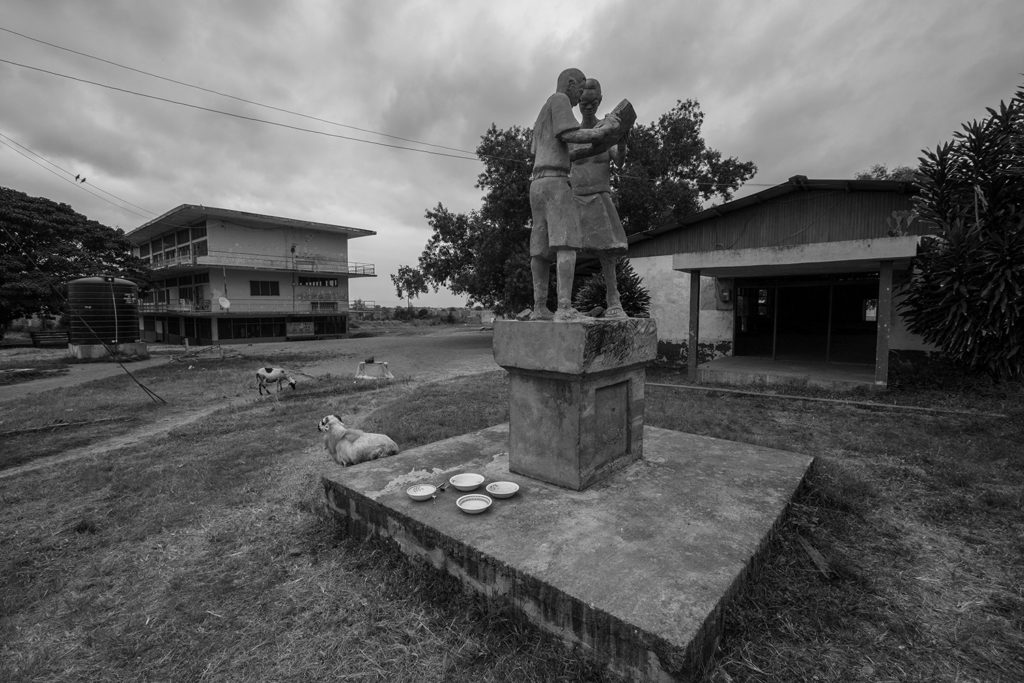
After Ghana’s independence in 1957, the village of Asutsuare became the focus of state-led, socialist-inspired agricultural and industrial development. A sugar factory was built, along with a residential area, a sugarcane plantation, and an irrigation system. Twenty years after its closure in the 1980s, the plant was bought by Chinese investors. Today, it manufactures paper and plastic products, while the sugar cane plantation was repurposed for the farming of rice, bananas, and fish.
Asutsuare Rebound, first presented at the Rotterdam Biennale of Architecture (2022), studies the reuse, reappropriation, and revalorisation of modernist planning in Asutsuare. We have interviewed retired employees of the sugar factory and younger inhabitants who explained to us how the material infrastructure and memories of the plant are a resource for imagining and producing a collective future.
By juxtaposing their voices with images by photographer Eric Don-Arthur, this project revisits the ambiguous impact of long-term planning on the landscapes of Asutsuare, including water management, agriculture, and social infrastructure. We understand these ambiguities not as evidence of failure, but as an invitation to rethink the future beyond both modernist techno-utopias and neoliberal short-termism.
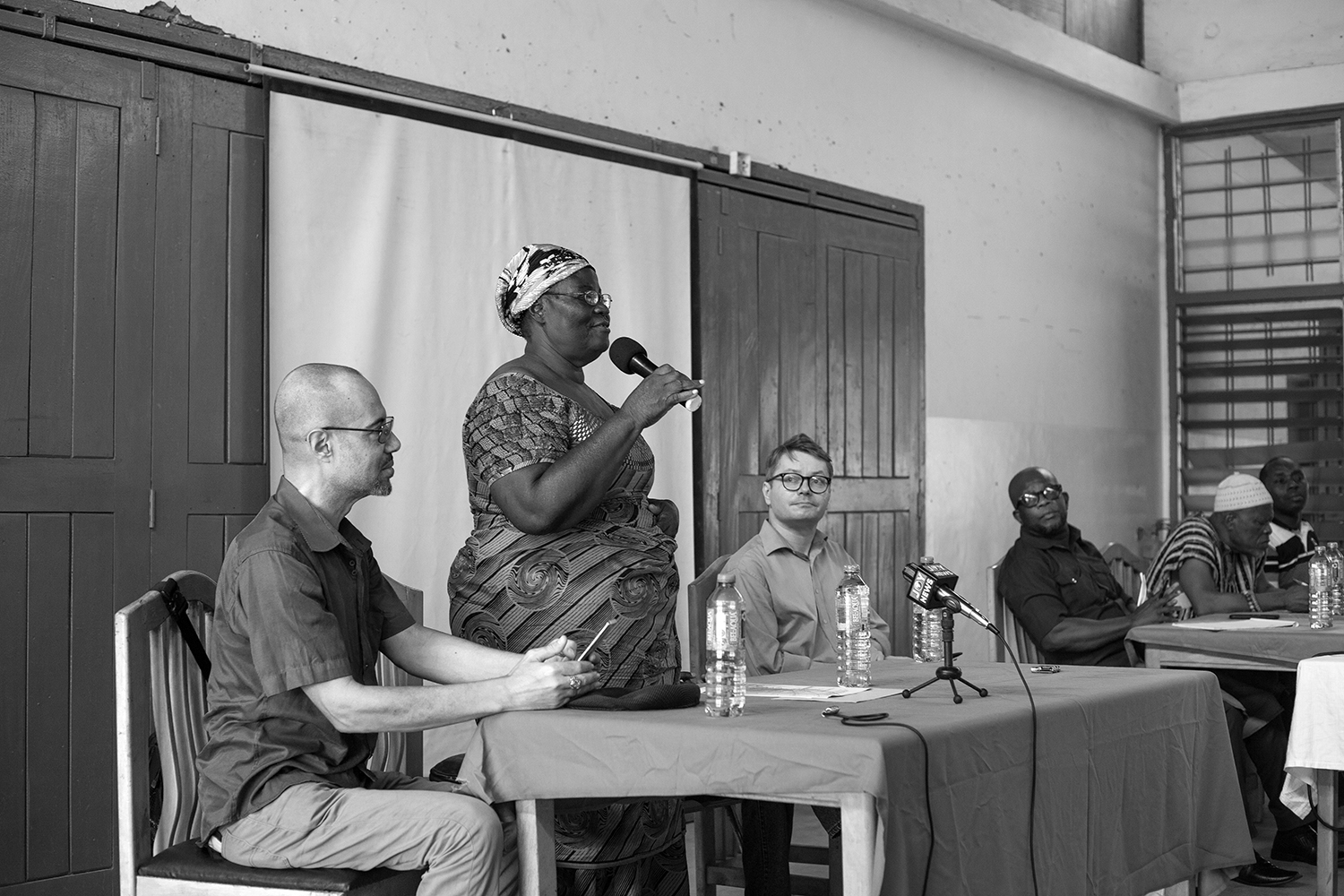
In July 2023, we returned to the Canteen Hall of the Asutsuare Estate to premiere Asutsuare Rebound, bringing its story back to the very ground that inspired it. The hall filled with local chiefs and government officials, members of the community, and Osudoku Senior High School students, whose school serves the wider Shai-Osudoku area. Among the audience were former workers of Ghana Sugar Estates Limited, who shared memories after decades of silence following the factory’s closure in the late 1980s. A discussion followed on how collective memories of the estate might become a means for imagining Asutsuare’s future.
Photographs by Eric Don-Arthur