Accra Futurism: 60 Year of Imagining Accra’s Waterfront
Accra Futurism: 60 Year of Imagining Accra’s Waterfront
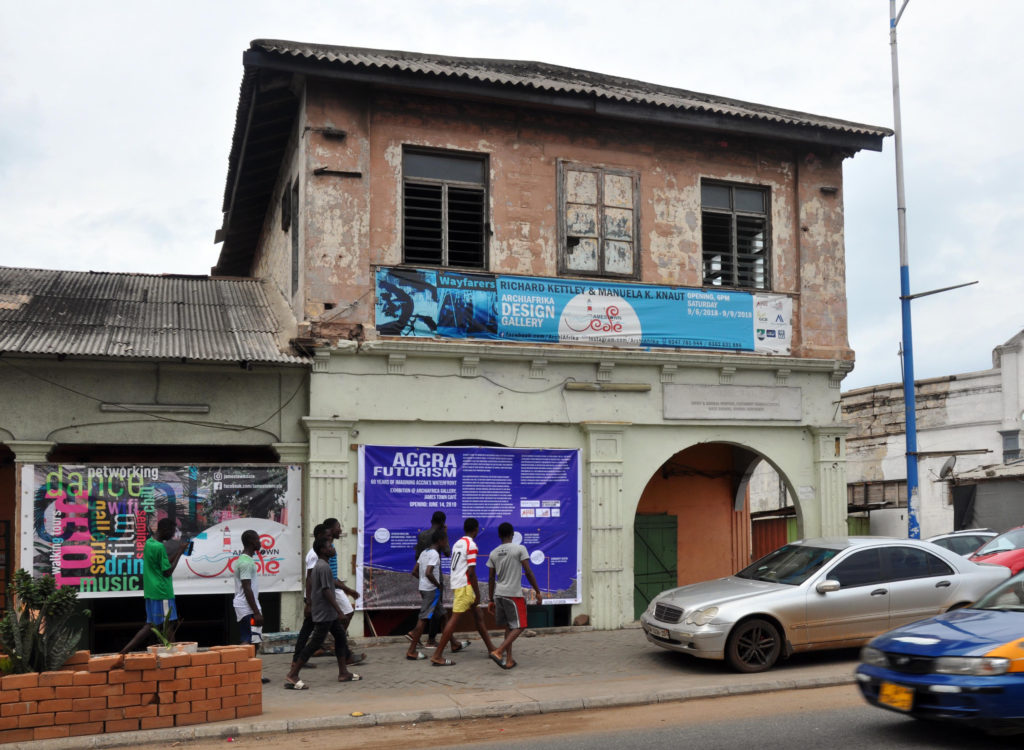
Exhibition, ArchiAfrica Gallery, James Town, Accra, Ghana, June 2019
Office Southeast and Manchester School of Architecture, University of Ghana at Legon, and Central University (Ghana).
In recent years, the Marine Drive has become a focal site for re-imagining and debating the future of Accra. Yet the most recent design of Accra’s waterfront is only one among many architectural and urban proposals envisaged for this area during the last 60 years. This exhibition revisits some of these designs, and shows the various, competing urban futures which they proposed for Accra.
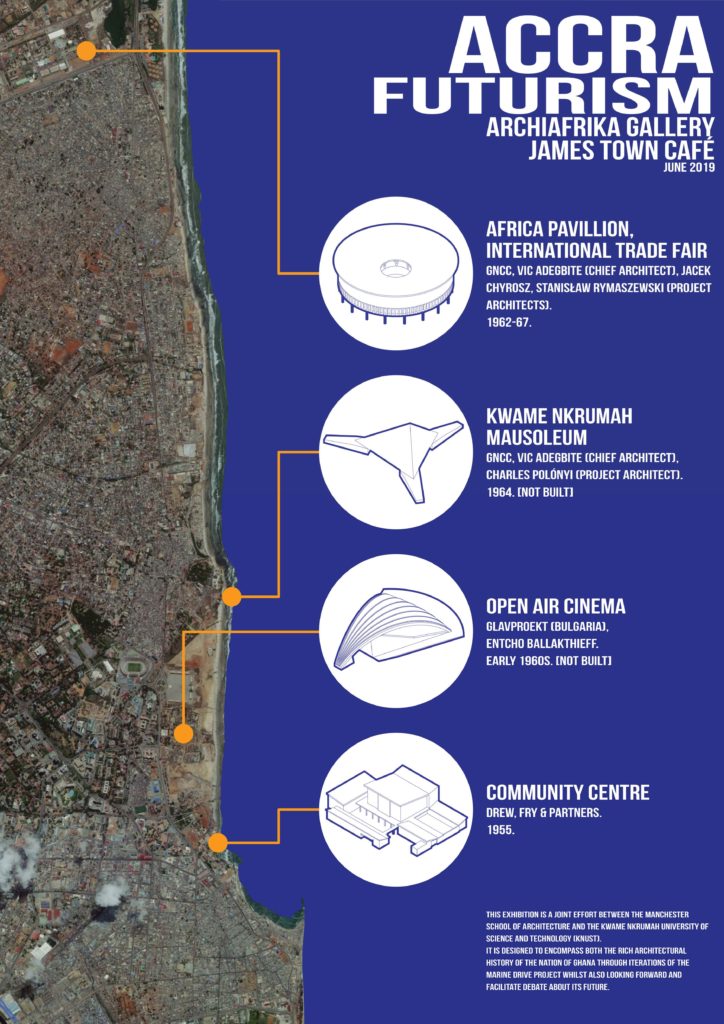
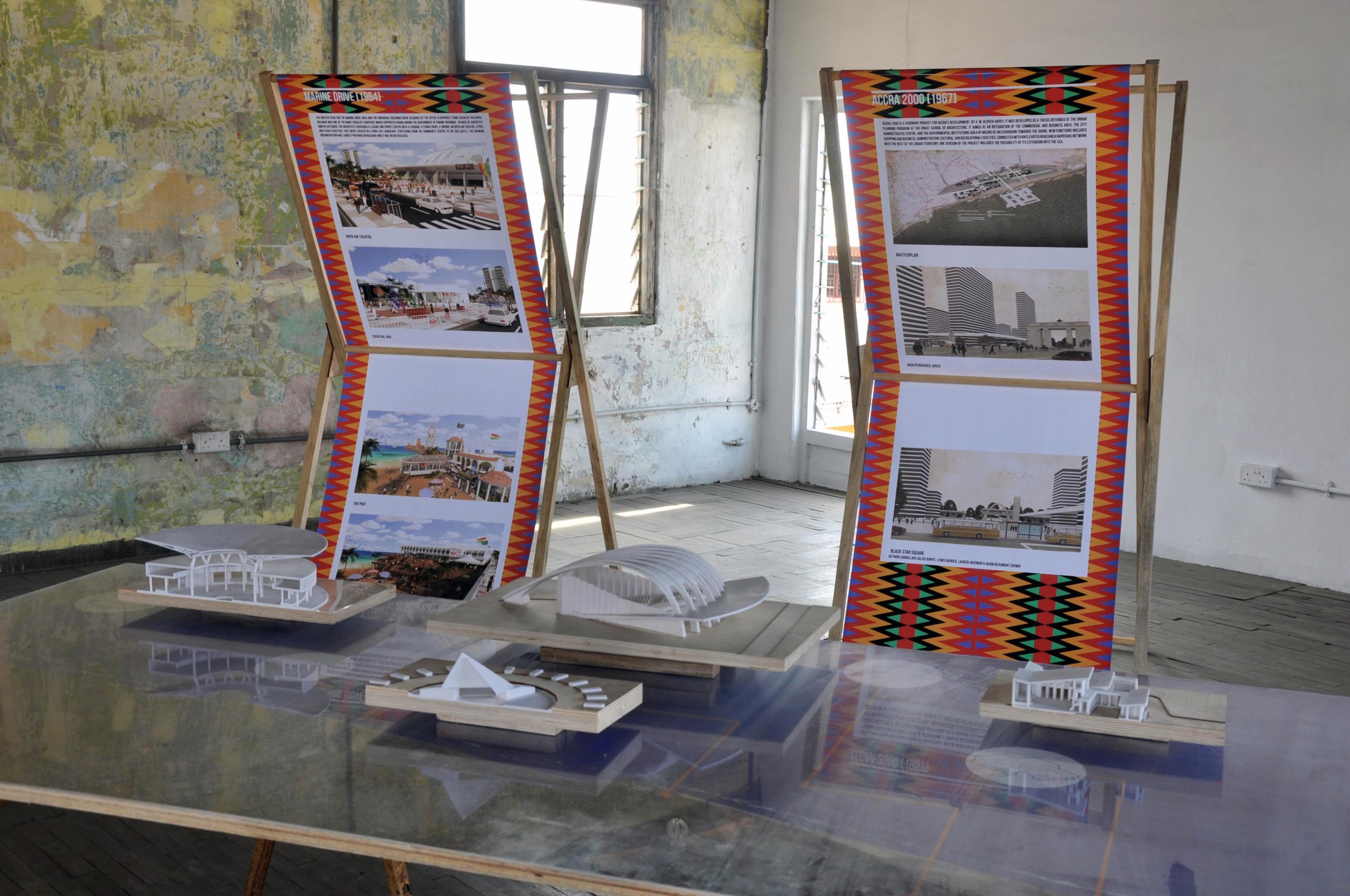
This exhibition focuses, in particular, on the first decade of Ghana’s statehood (1957-66). As the first country in sub-Saharan Africa to gain independence under the leader Kwame Nkrumah, Ghana became a centre of a cosmopolitan architectural culture to which Ghanaian, British, Eastern European, African-American, and other architects and urban planners contributed. The designs from the Nkrumah period shown in the exhibition include the large-scale development of the Korle-Bu Lagoon into a leisure and sport centre; three competing projects for the Marine Drive area; the visionary Accra 2000 design developed at the School of Architecture in Kumasi (KNUST), a monumental mausoleum for Kwame Nkrumah at the Osu Castle, and the development of Labadi around the International Trade Fair. This exhibition brings to the fore specific visions of urban everyday for Accra that were proposed and conveyed by these designs. They are analysed by means of a GIS-based database of archival planning documents for Accra since the late colonial period.
Based on archival research in Ghana, Eastern Europe, the UK, and the US by Łukasz Stanek (Manchester School of Architecture), this exhibition was prepared in the course of two seminars taught by Stanek at the Manchester School of Architecture (Manchester, UK) and the Taubman College for Architecture and Urban Planning, the University of Michigan (Ann Arbor MI, USA). The exhibition was designed by students of the Manchester School of Architecture, advised by Ola Uduku, in collaboration with students of the University of Ghana at Legon and Central University (Ghana). Additional advise was provided by Irene Addo (University of Ghana at Legon).